What Makes a Good Astrophotography Spot?
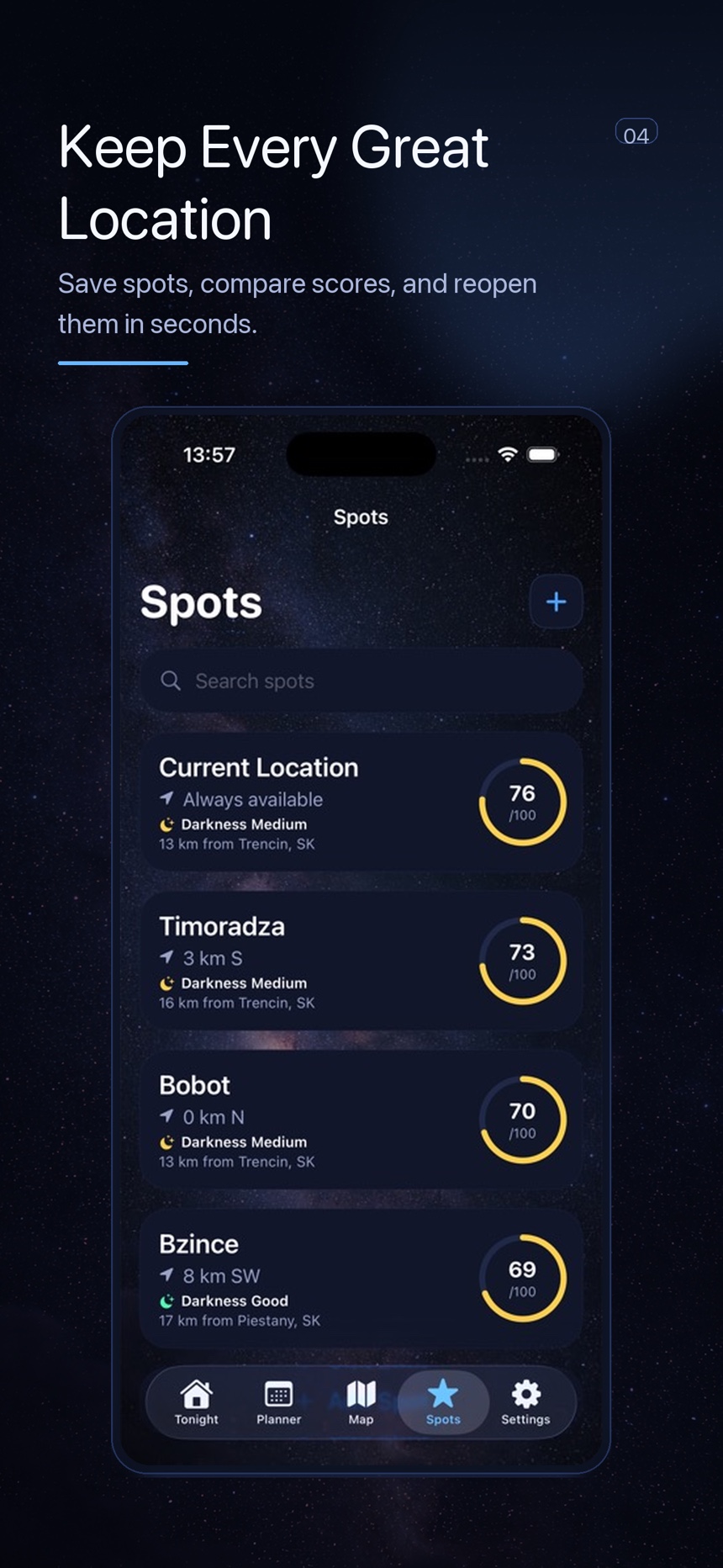
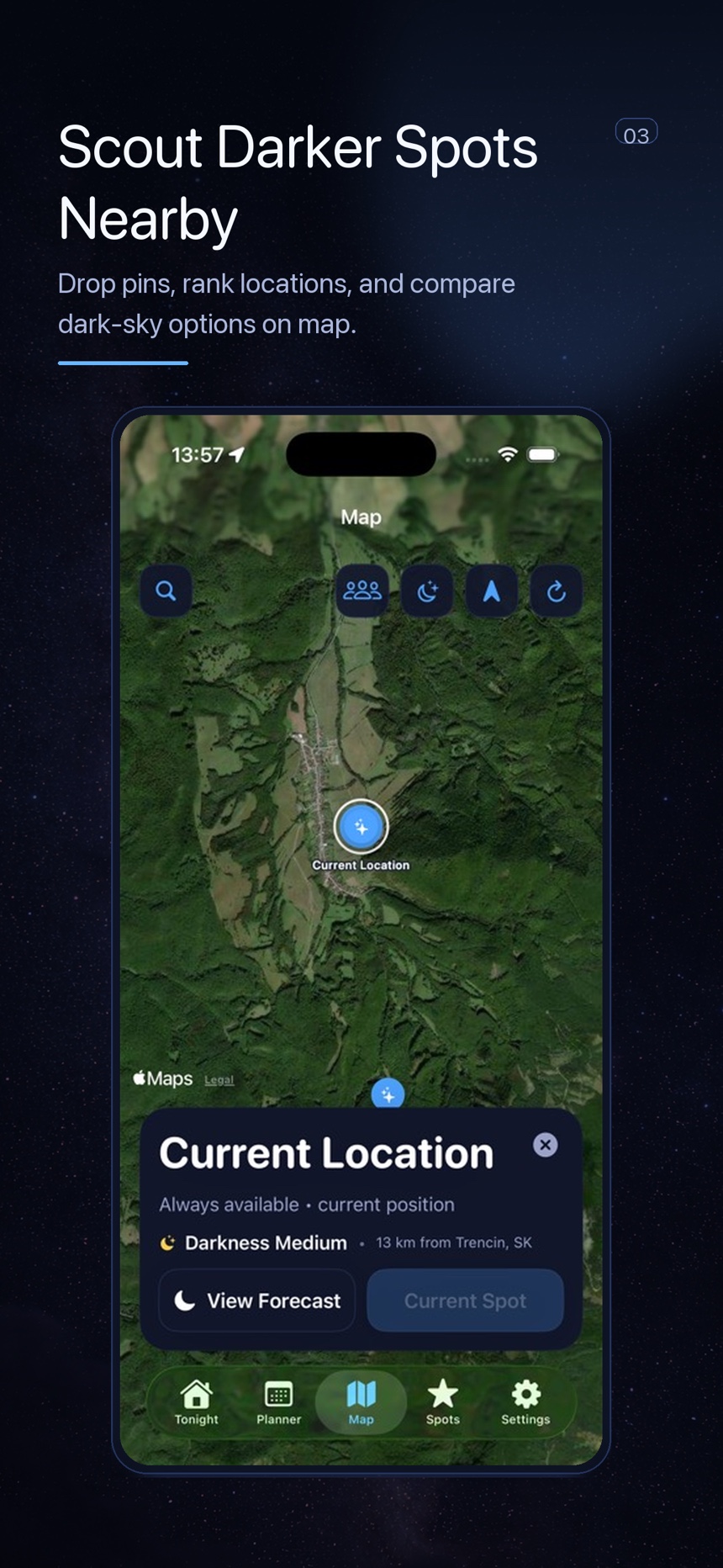
Judge whether a dark location is actually usable by checking horizons, access, foregrounds, local light, weather exposure, and repeatability before you commit to the drive.
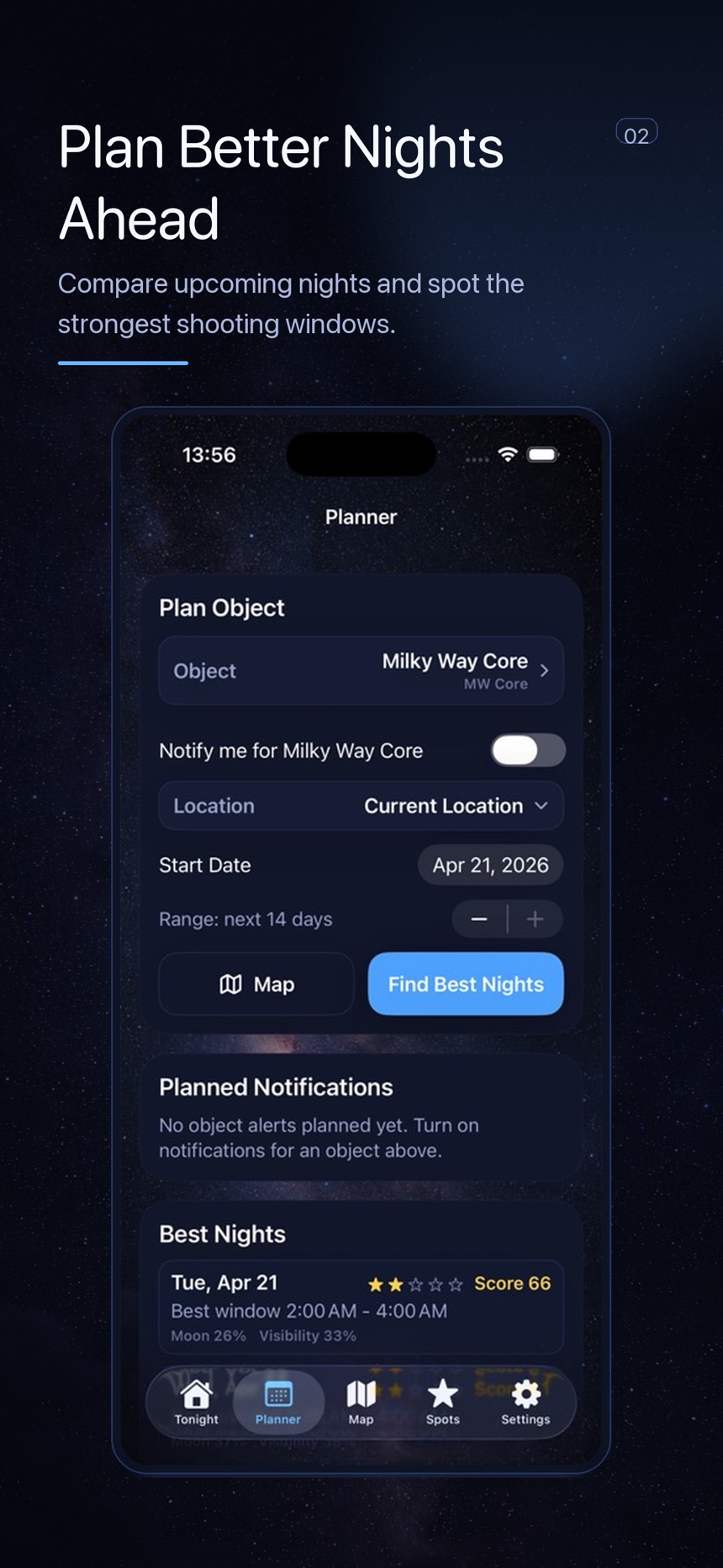
Practical planning notes for the decisions that happen before the camera comes out: whether tonight is worth it, how moonlight changes the shot, where to scout, and when a target has a real window.
Judge whether a dark location is actually usable by checking horizons, access, foregrounds, local light, weather exposure, and repeatability before you commit to the drive.
Build a moonrise composition around a real foreground by matching direction, elevation, distance, twilight, and low-horizon cloud risk before you drive.
Know when twilight is useful, when it quietly ruins contrast, and when your Milky Way or deep sky plan needs true astronomical darkness.
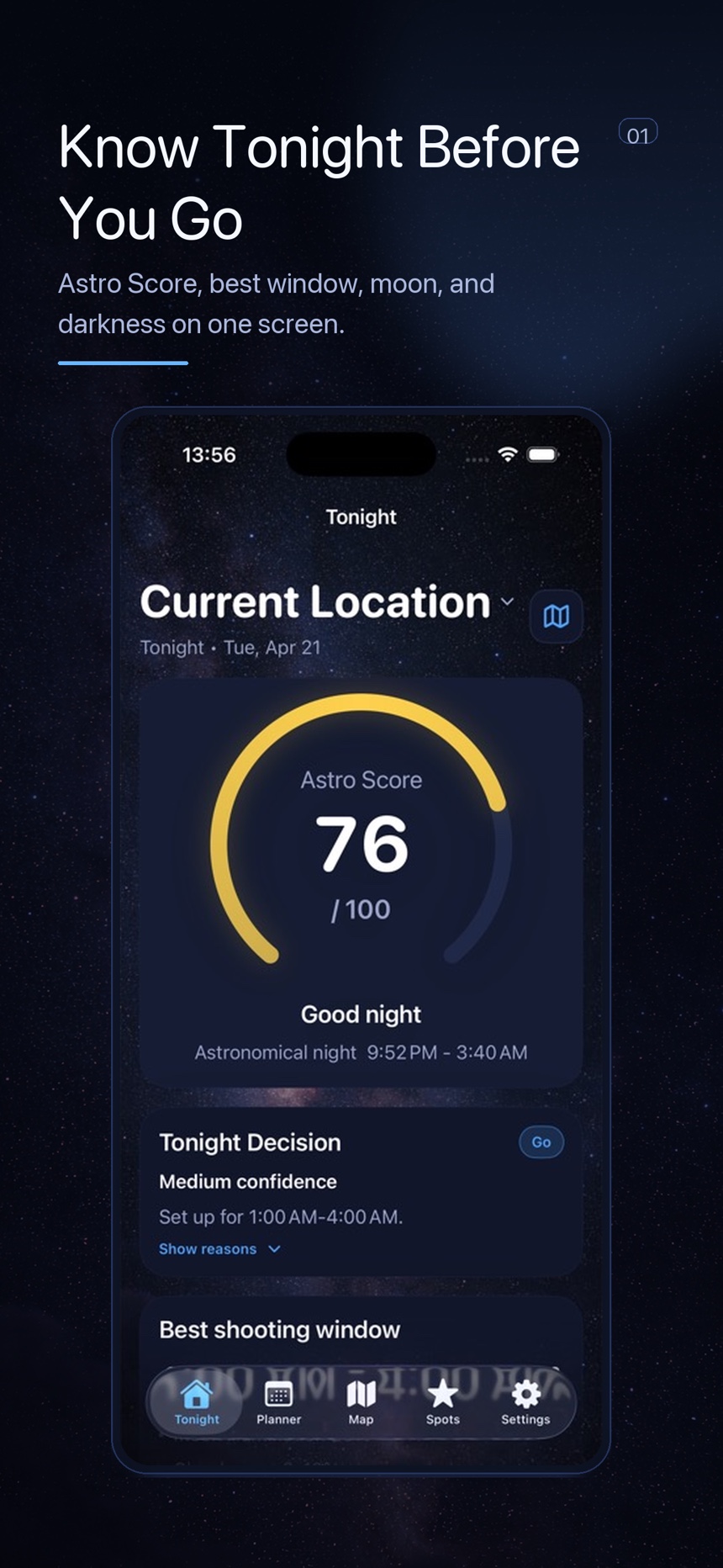
Cloud cover is not a single yes-or-no number. Judge cloud type, timing, target direction, moonlight, and drive risk before committing to the session.
A practical go or no-go checklist for reading clouds, moonlight, darkness, wind, transparency, and target timing as one decision instead of six separate tabs.
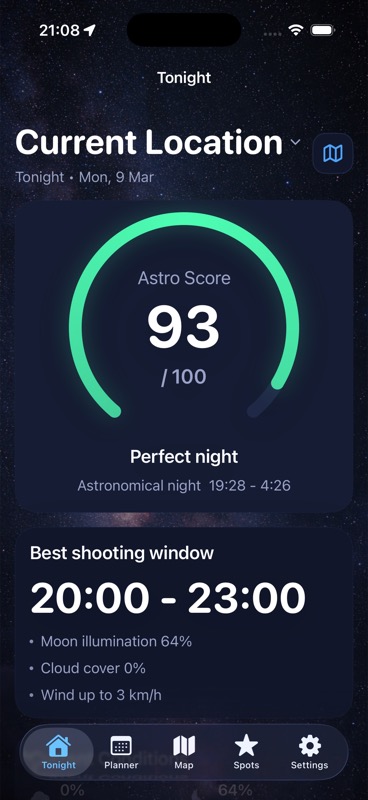
Moonlight is not automatically bad. The question is what you are shooting, when the moon is up, and how far it sits from your target.
A good spot is more than a dark patch on a map. It needs usable horizons, access, safety, weather, and repeatability.
Milky Way planning is a chain of constraints: season, direction, moon, darkness, foreground, and whether the sky will actually cooperate.
Altitude, darkness, moon distance, local horizon, and weather decide whether a galaxy or nebula is merely visible or genuinely worth shooting.