
Deep sky planning often starts with a catalog object and a hopeful question: is it visible tonight? That question is too easy. Many targets are technically visible for hours while being too low, too close to the moon, blocked by a local horizon, or sitting under clouds during the only part of the night that matters.
A useful deep sky plan is built around target windows. A target window is the span of time when the object is not merely above the horizon, but genuinely worth imaging.
Altitude is the first quality filter
Higher targets usually mean cleaner data. When an object is low, you image through more atmosphere. Stars can bloat, contrast falls, gradients increase, and local haze or light pollution becomes more visible. The exact acceptable altitude depends on your gear, target, sky, and tolerance, but the principle is reliable: do not treat all above-horizon time as equal.
Culmination, when the target reaches its highest point, is often the strongest part of the session. A two-hour window around a high culmination can be more valuable than five hours of low-altitude exposure.
Darkness must overlap the target
A target that is high before astronomical darkness may not be ready yet. A target that rises after the dark window ends may be a better fit for another month. Good deep sky planning asks when altitude and darkness overlap, not just whether both happen somewhere in the night.
This is especially important in seasons with short nights. A target can be theoretically available but never have a strong dark window from your location.
Moon separation affects contrast
Faint galaxies, nebulae, and dust structures need contrast. Moonlight raises the sky background and can make processing harder, even when the moon is outside the frame. The closer and brighter the moon is, the more you may fight gradients and reduced faint detail.
Narrowband imaging can tolerate more moonlight than broadband color work, but it is not magic. If you are shooting broadband galaxies or reflection nebulae, moon-aware planning matters a lot.
The local horizon can erase the theoretical window
Planetarium charts usually assume a clean horizon. Real locations do not. Trees, buildings, ridges, fences, and terrain can block the first or last part of a target's path. If the target is only strong for a short period and your spot blocks that direction, the plan may fail before the camera starts.
The more you use a location, the more valuable horizon notes become. Knowing that a target clears the trees at 35 degrees from one spot can save an otherwise confusing night.
Weather decides which window survives
Deep sky sessions need duration. A forecast with a clean two-hour hole can be enough for testing, calibration, or a bright object, but faint projects often need longer runs across several nights. Look at cloud timing, wind, humidity, and temperature changes across the target window, not just the evening forecast.
If the target is best from 23:30 to 02:30 and clouds arrive at midnight, the night may be better spent on a different target or a shorter experiment.
Match targets to the night you actually have
Strong planning does not always mean forcing your favorite target into the calendar. Sometimes the best move is choosing a target that fits the available window. Bright clusters, lunar details, wide star fields, or shorter focal length projects can make sense when conditions are mixed.
Keep a list of targets by season, direction, altitude, and tolerance for moonlight. That way a partly compromised night still has a purpose.
Useful target time equals altitude plus darkness plus moon safety plus clear sky plus an unblocked local horizon. Remove any one of those and the window shrinks.
Where DarkScout fits
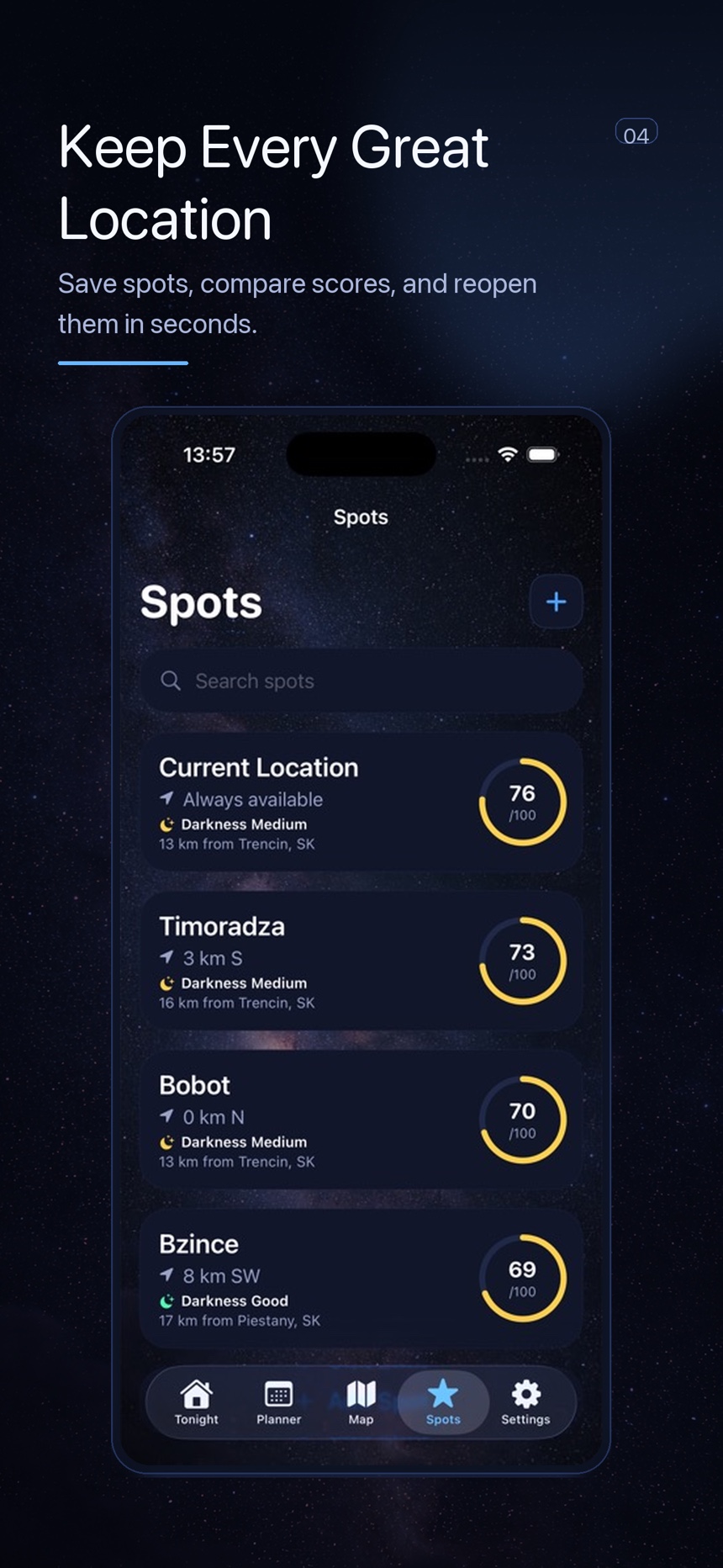
DarkScout's planning flow is built around the difference between visible and worth shooting. It connects object timing, moon context, night conditions, and spot choice so a deep sky session can be judged as a real window. That helps you spend clear nights collecting better data instead of discovering constraints one by one in the field.